Uncategorized

Inexpensive DIY fall decorations

IMG_20151014_161840We have lived at our current home for almost a year now.  I haven’t done any real big decorating because I didn’t want to “lock” myself into this house.  But I realize that we are going to be here so I might as well do something to make the home more homey.  Plus it gives the children a chance to be creative and help decorate the home.

I wanted to do stuff that wasn’t going to cost much, but would add a nice touch to our home.  I came up with these ideas…. thank goodness for Pinterest influence:)

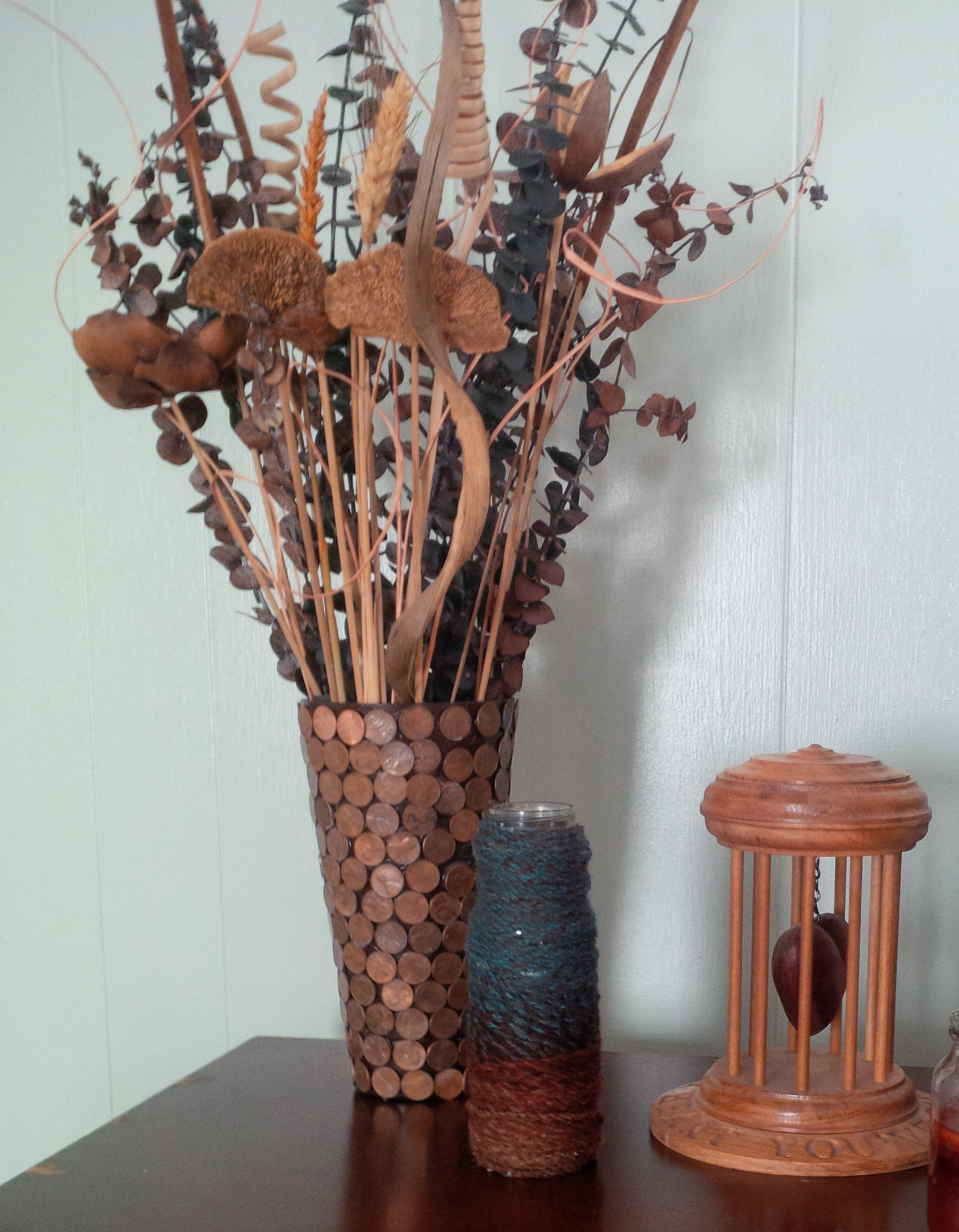
Our $2.06 penny vase

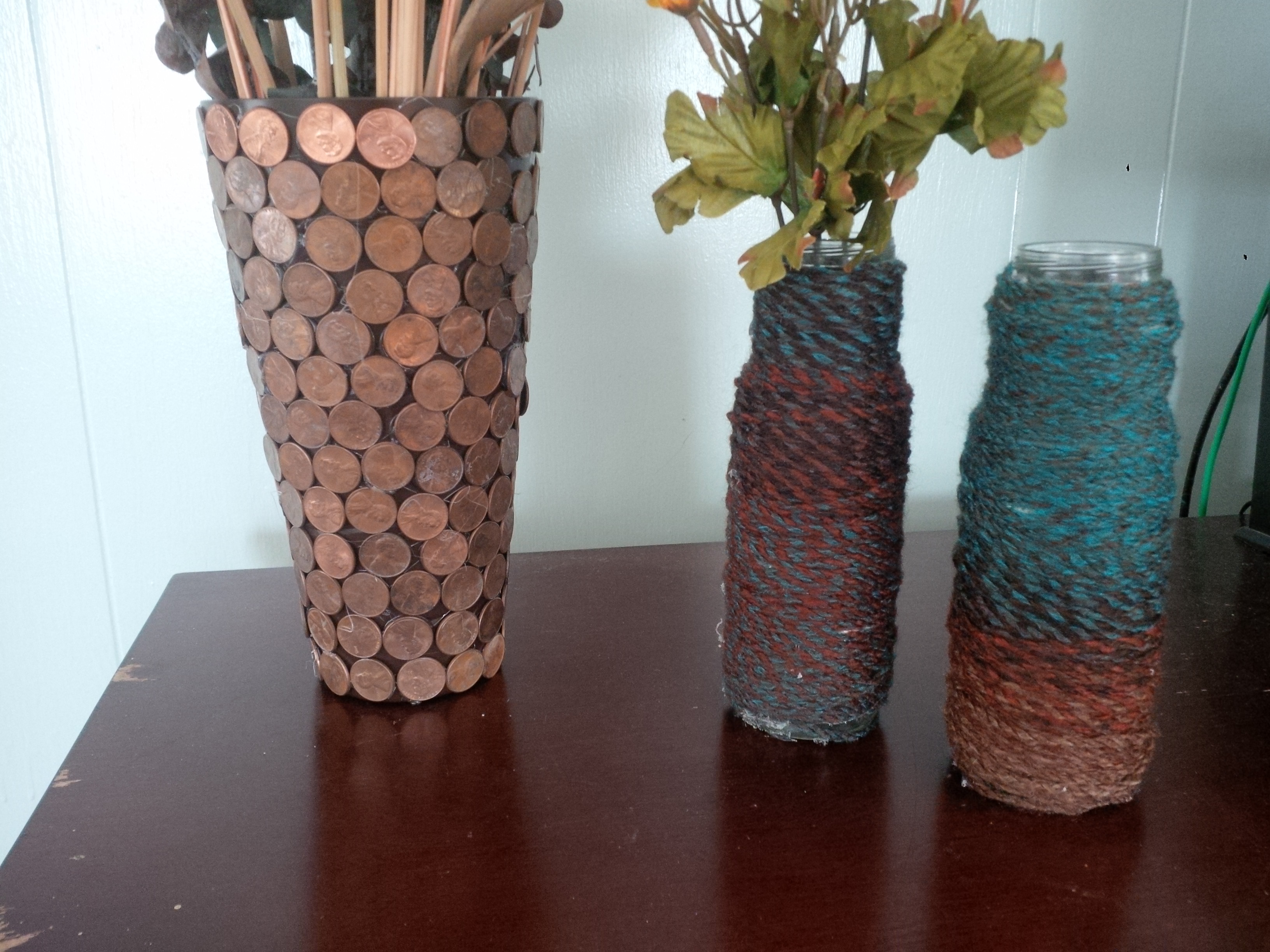
IMG_20151014_144153This was a fun project for our ten year old to make.  I spray painted a glass vase  black.  My daughter then washed some pennies that she got from her brother Collin’s money rolls. She soaked them in 1 cup vinegar and 3 Tablespoons salt solution.  We let them sit for about 10 minutes.  You can scrub them as needed, but we just drained and dried them.  She then hot glued pennies all around the vase.  It was a good math tool as well, as she counted $2.06 that she used.

IMG_20151014_161832We filled it with a bunch of floral’s that we had found inexpensively.  Easy and inexpensive.

Yarn bottles

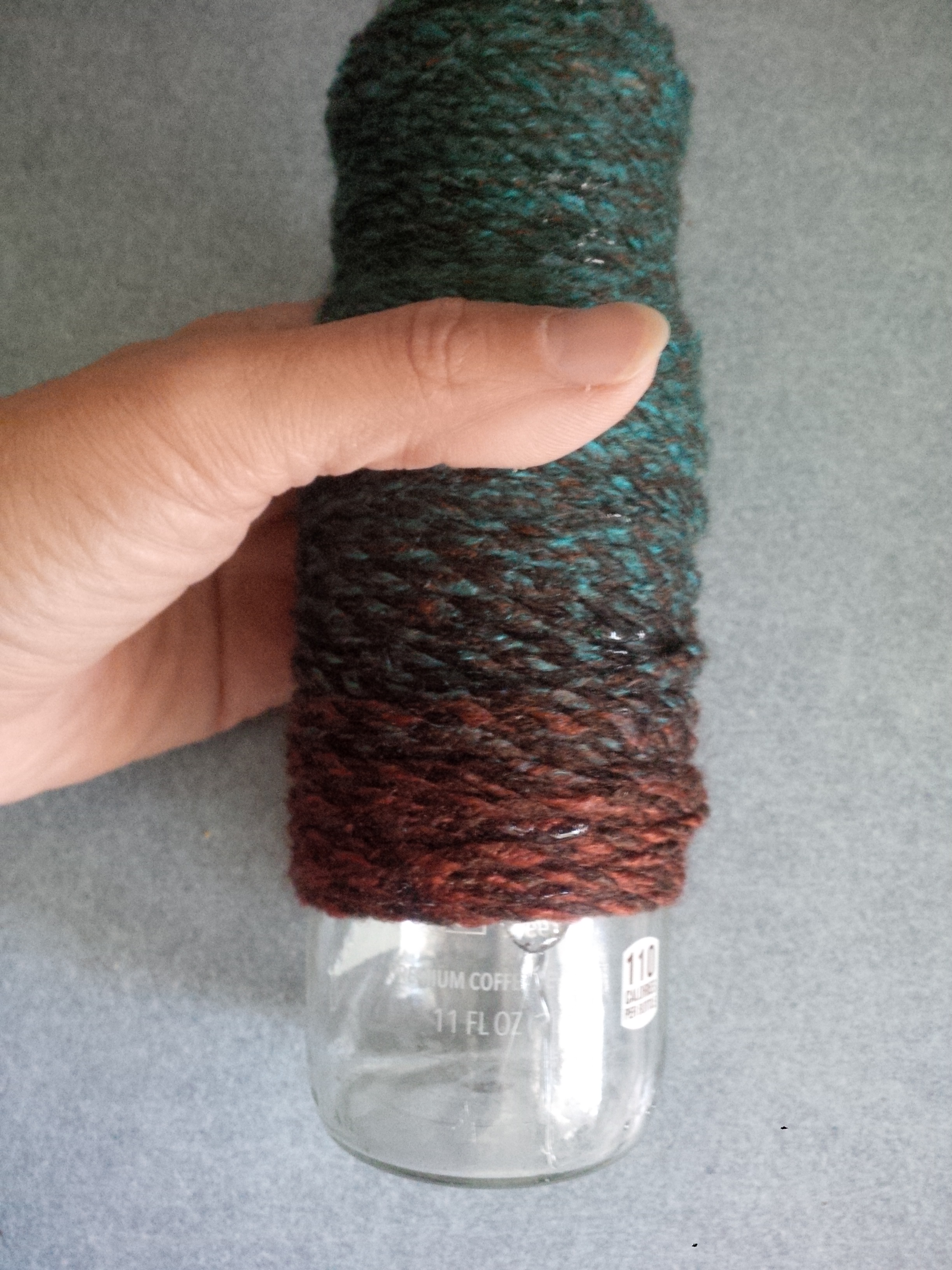
I had found a picture of twine covered bottles and I had thought that looked neat to do.  I saved a couple of Starbucks coffee drink bottles for this purpose.  The problem was that I could not find twine inexpensively.  Our local Walmart had some for the holidays but it was only a small amount and I would of had to pay $7.50 to cover the jar—not worth it for me.  Oh a need for a Hobby Lobby here…..

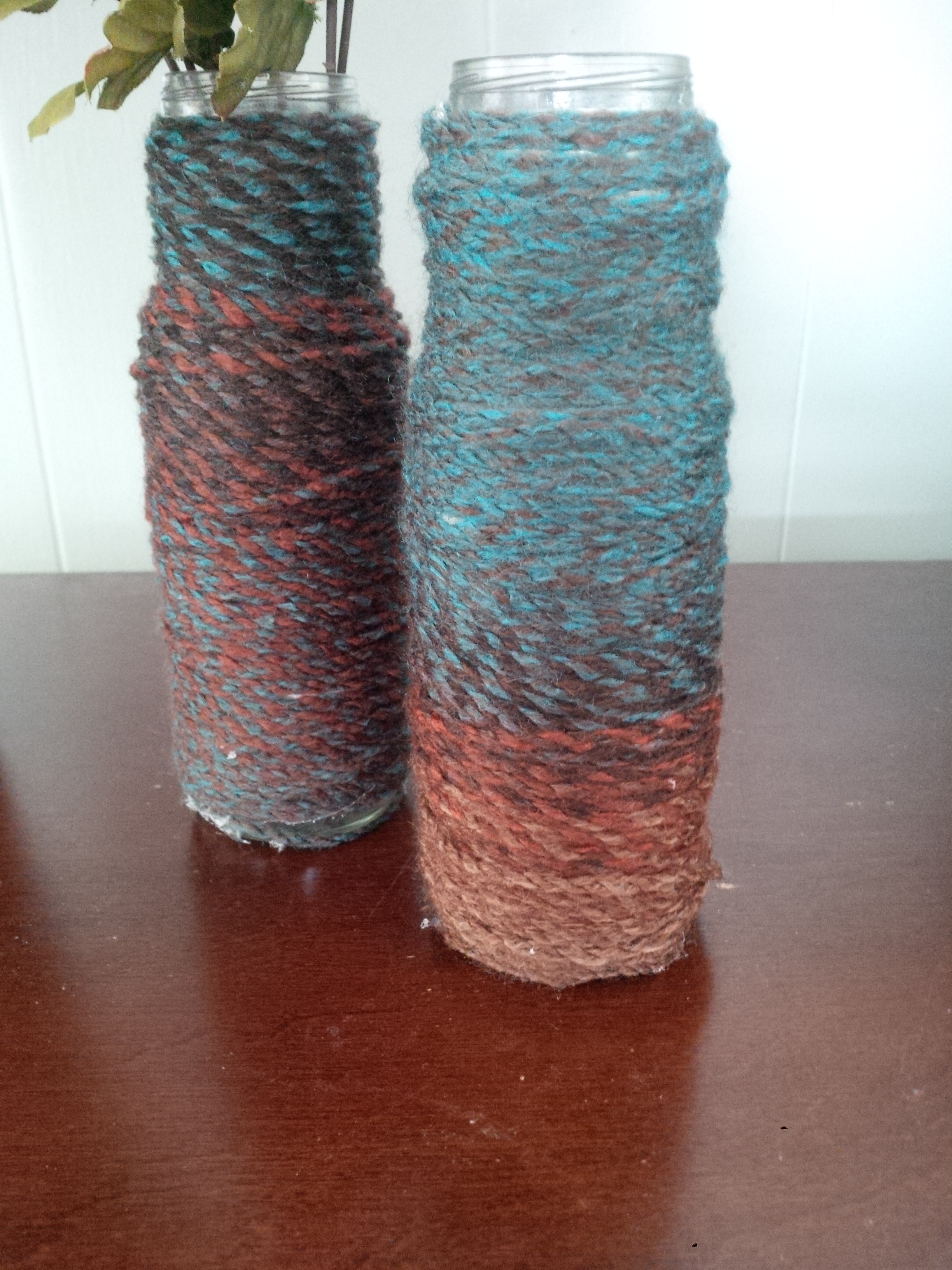
My daughter loves to crotchet and has lots of odd and end yarn scraps.  I found one and started hot gluing it around the bottle.

IMG_20151014_140556The results………we got two bottles, that I think look rather neat.

IMG_20151014_143527Another inexpensive idea.

Decorative balls

I had found a basket and wanted to fill it with something.  My intentions were pine cones.  But I was having a hard time finding pine cones here. Then I saw decorative yarn balls and I thought those looked neat at the store.  But the price tag was not.  In my head, I thought we could make this.  So we did.

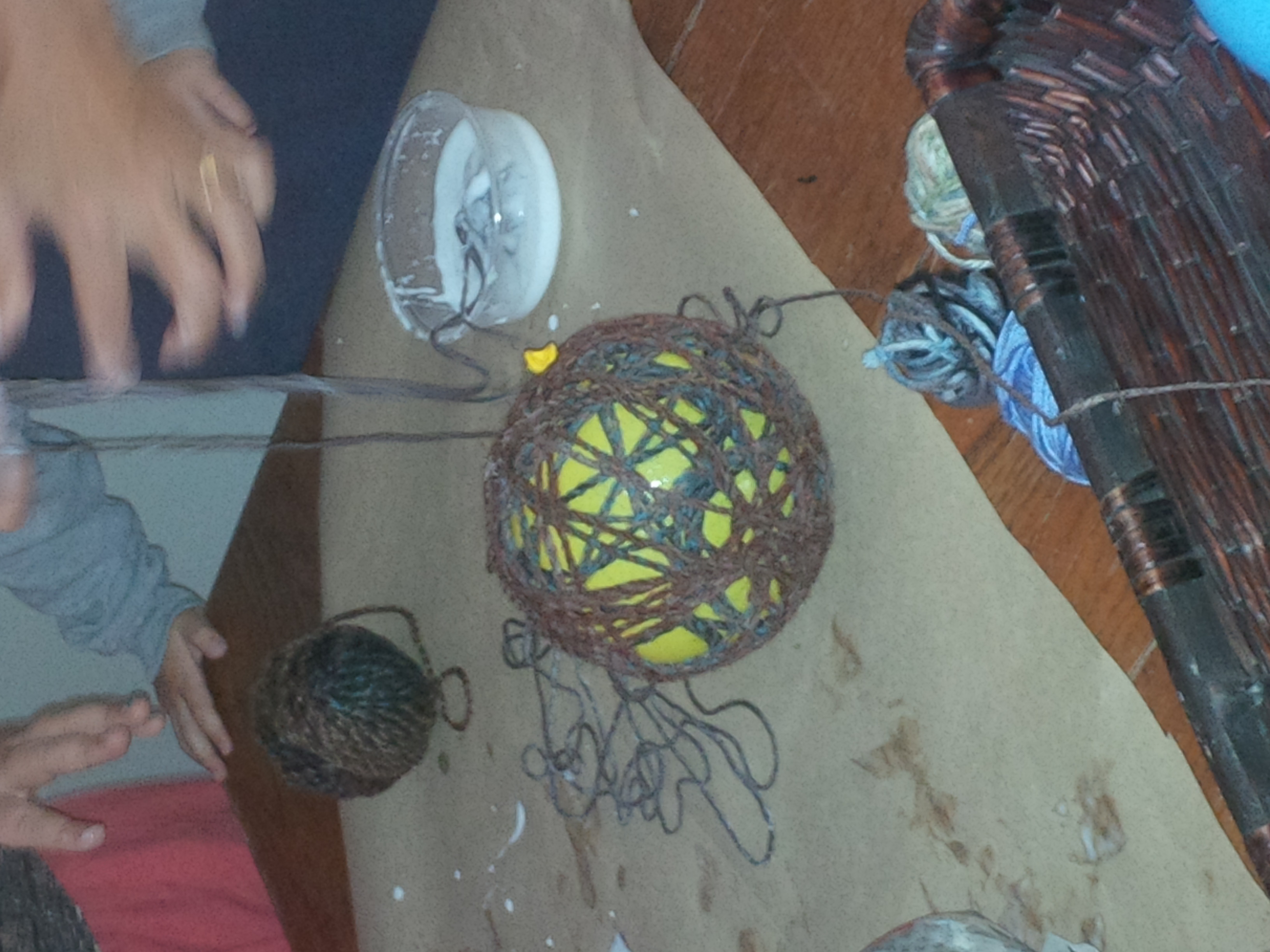
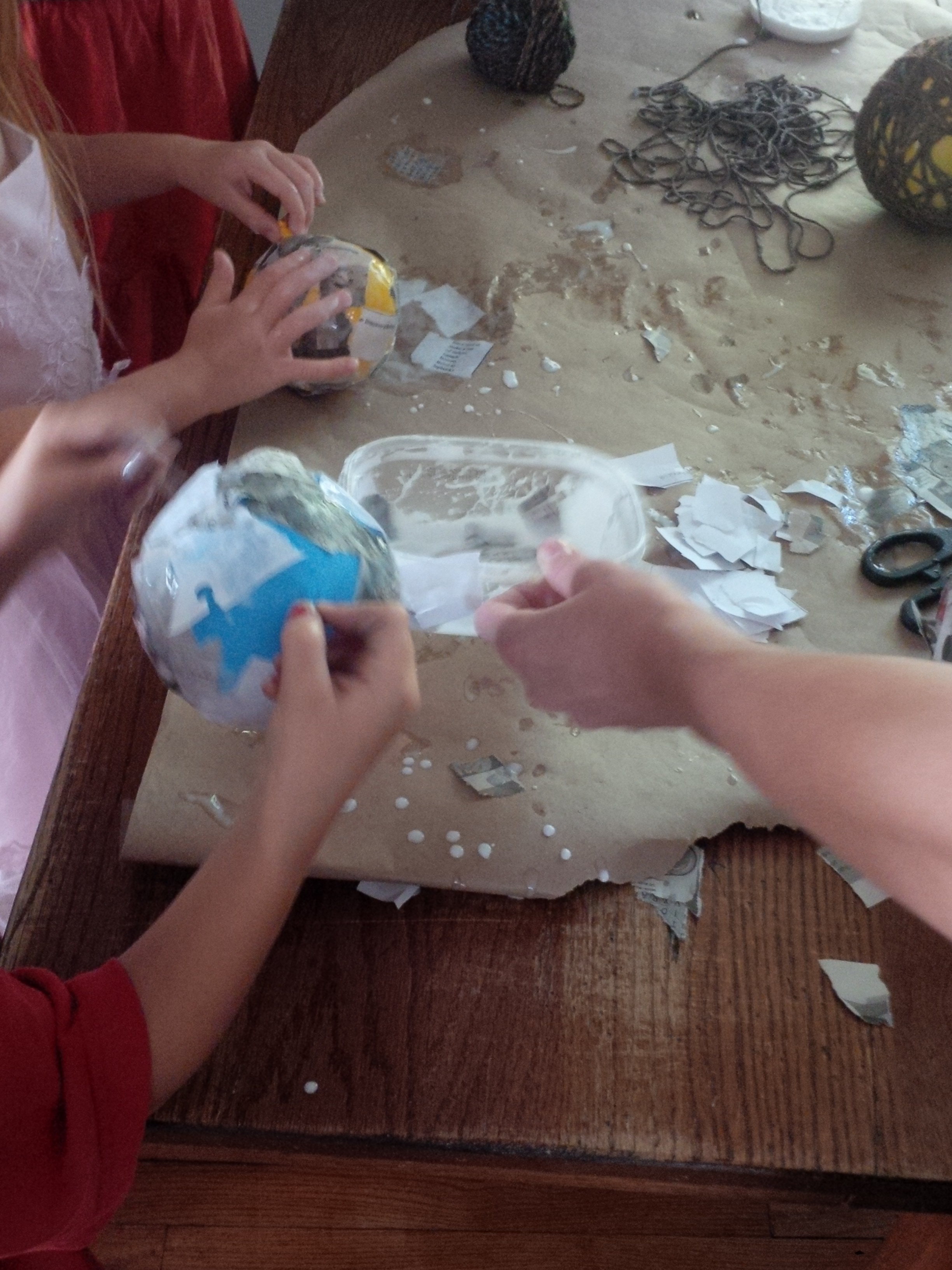
We started out by blowing up balloons to the size that we needed.  I then took some Elmer’s glue and watered it down a bit.  Oh first….I covered our work area with paper—young children and glue make a mess!!!!

IMG_20151014_130554

We then worked on the yarn ball.  We set the yarn in the glue bowl and then squeeze off the glue from the yarn as we wrapped it around the balloon. Messy, but it worked.IMG_20151014_130633

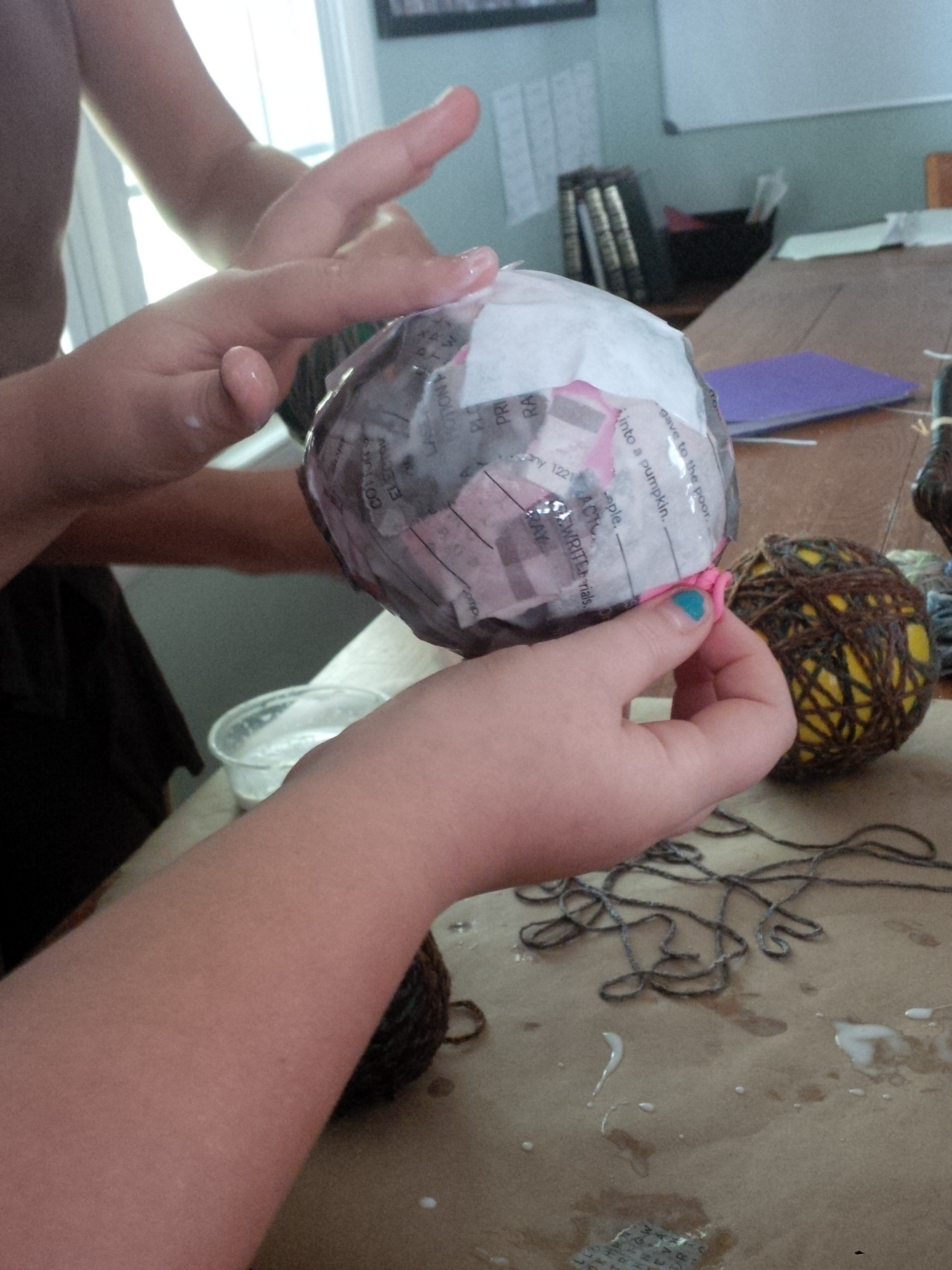
Other children were doing paper mache on the balloons.  We are going to paint these later.  It was like making mini pinatas. IMG_20151014_130703

Some children did well, smoothing out the paper and others, we had to go back and fix.  But overall, it was fun and they had fun getting messy.  Something I don’t like to do as far as crafts and mess and little ones.  But we did it!IMG_20151014_131239

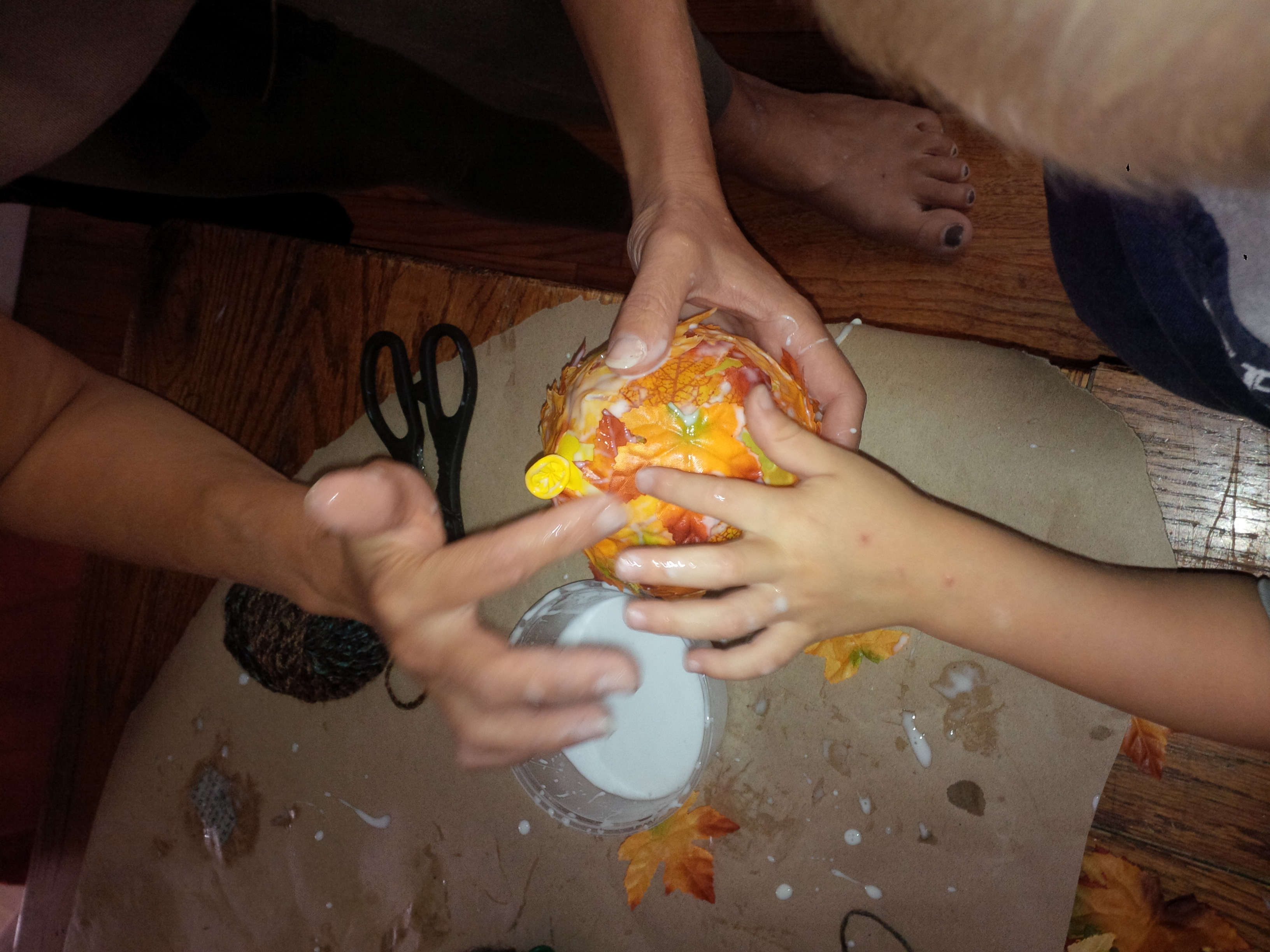
Then we thought we would glue on some fall leafs that we got at the Dollar store…..we will see if that turns out.IMG_20151014_144212

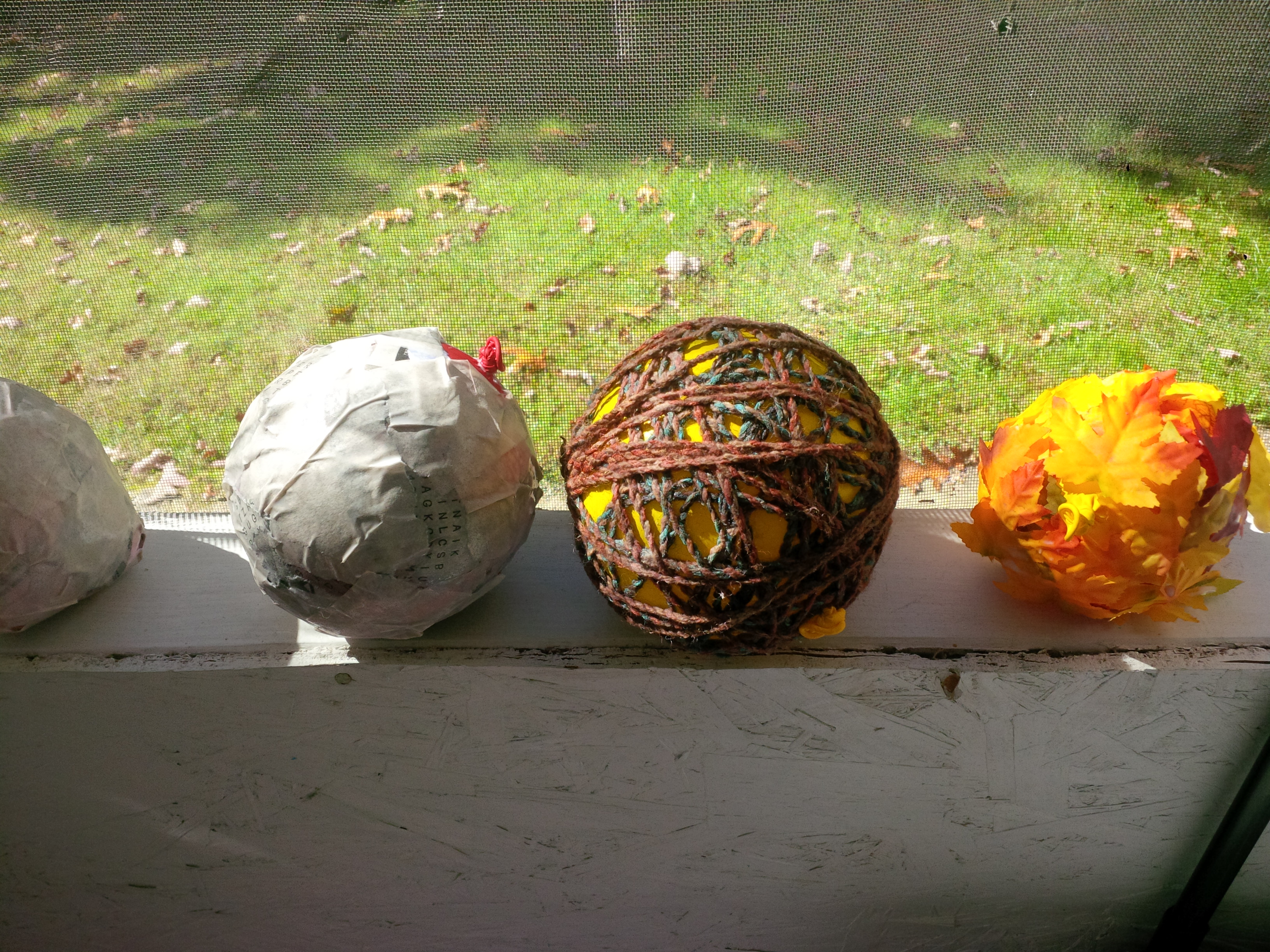
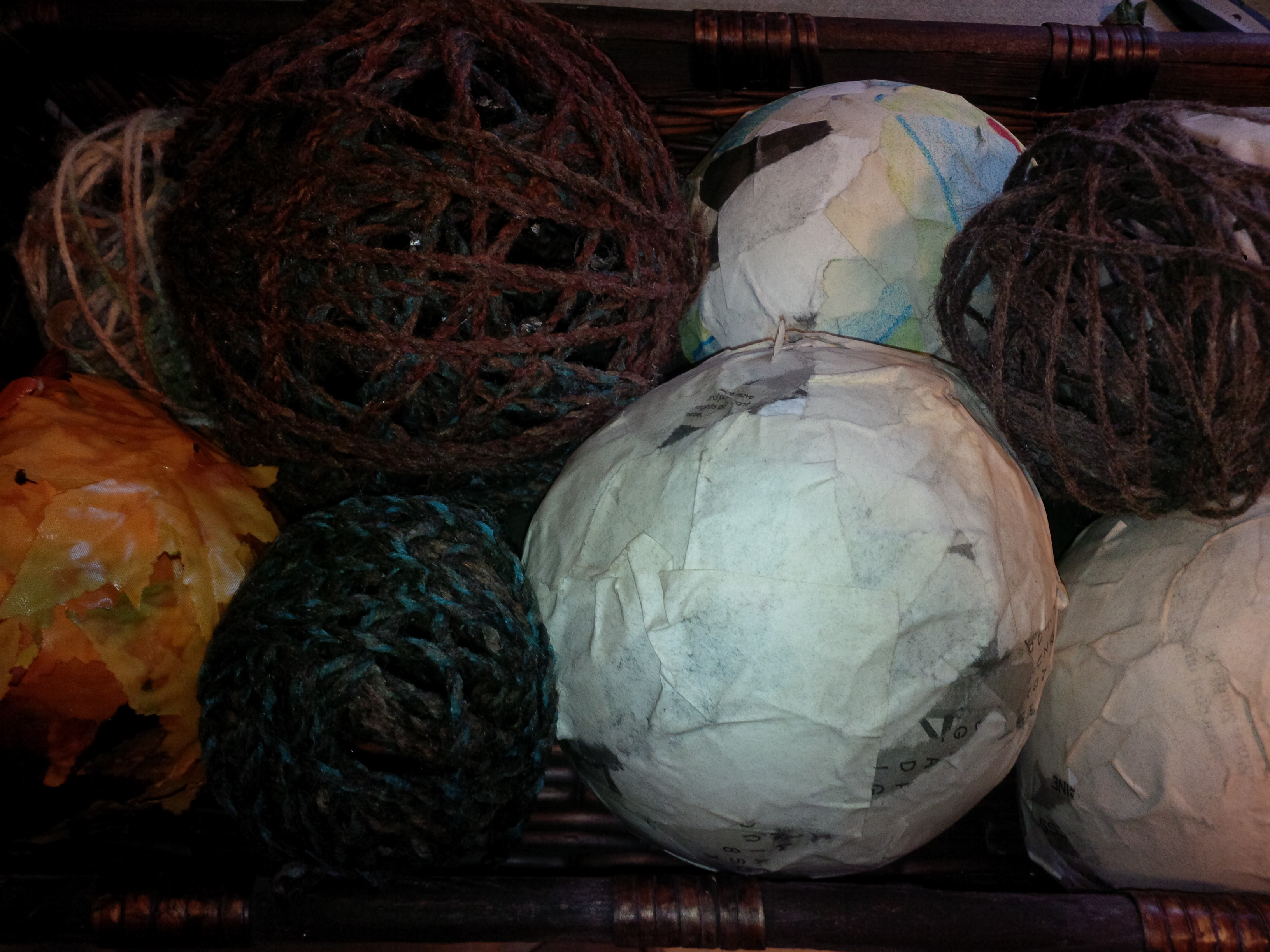
It was a beautiful warm 80 degree fall day, so we set them on the porch window sill to dry.  By morning time they had dried.  I took a pair of scissors and popped the balloon inside and pulled it out.  A couple of paper mache ones had deflated while drying.  Too big of paper chunks and too much glue:)  One of the yarn balloons deflated and I just untied it and blew it back up.  It worked!IMG_20151015_075350

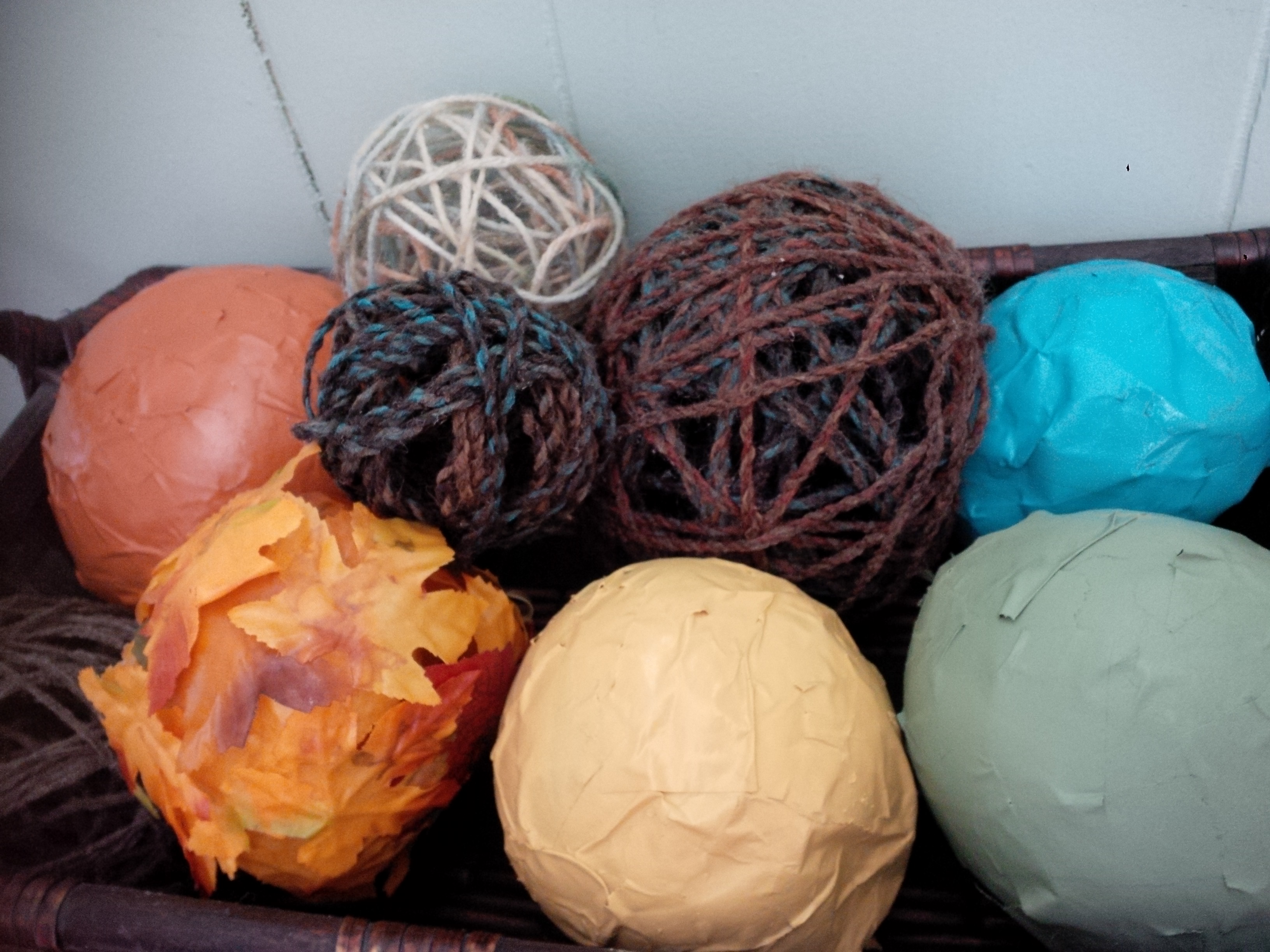
Here they are after they dried.  The thicker yarn is a little smooshy, I would recommend using more glue or using thinner yarn.IMG_20151015_164714The paper mache, I spray painted with some leftover paint that we had.  The turquoise one was the deflated balloon, but it was made by a younger child—so we kept it.  Shove it in the corner of the basket:)  Even the leaf one turned out pretty neat.  Not a bad decoration for things we had lying around the house.

popcorn candles and beaded candles

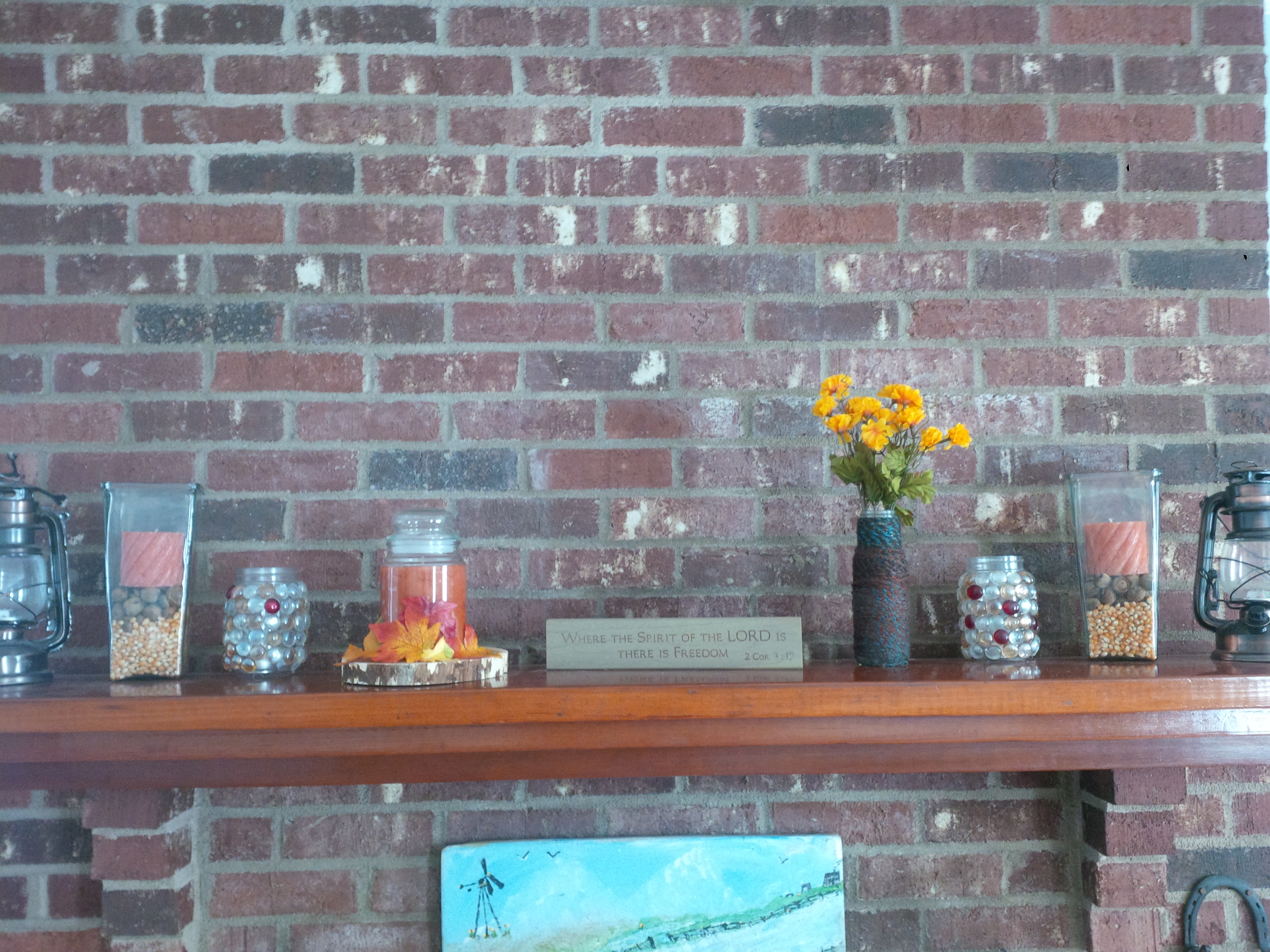
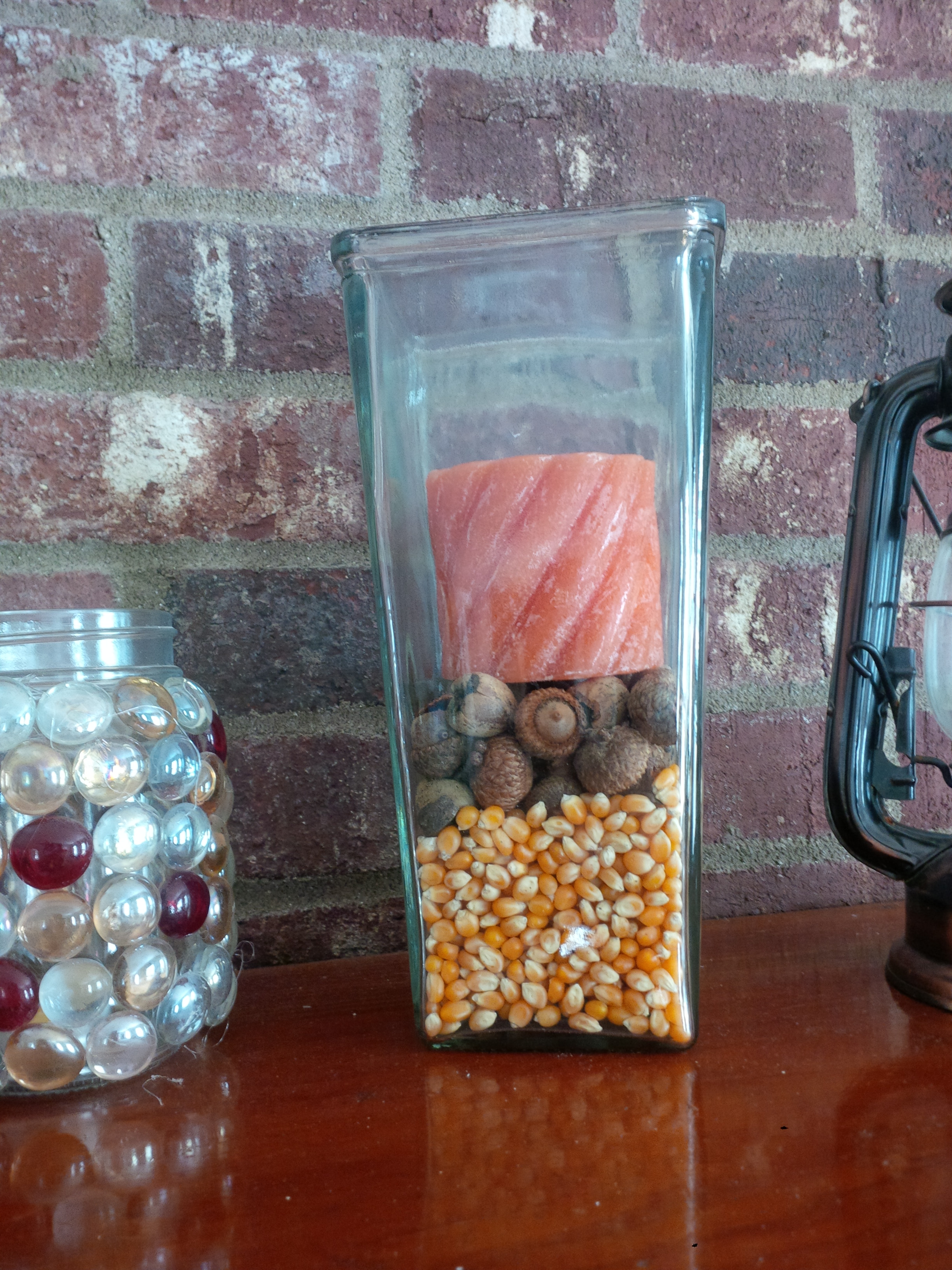
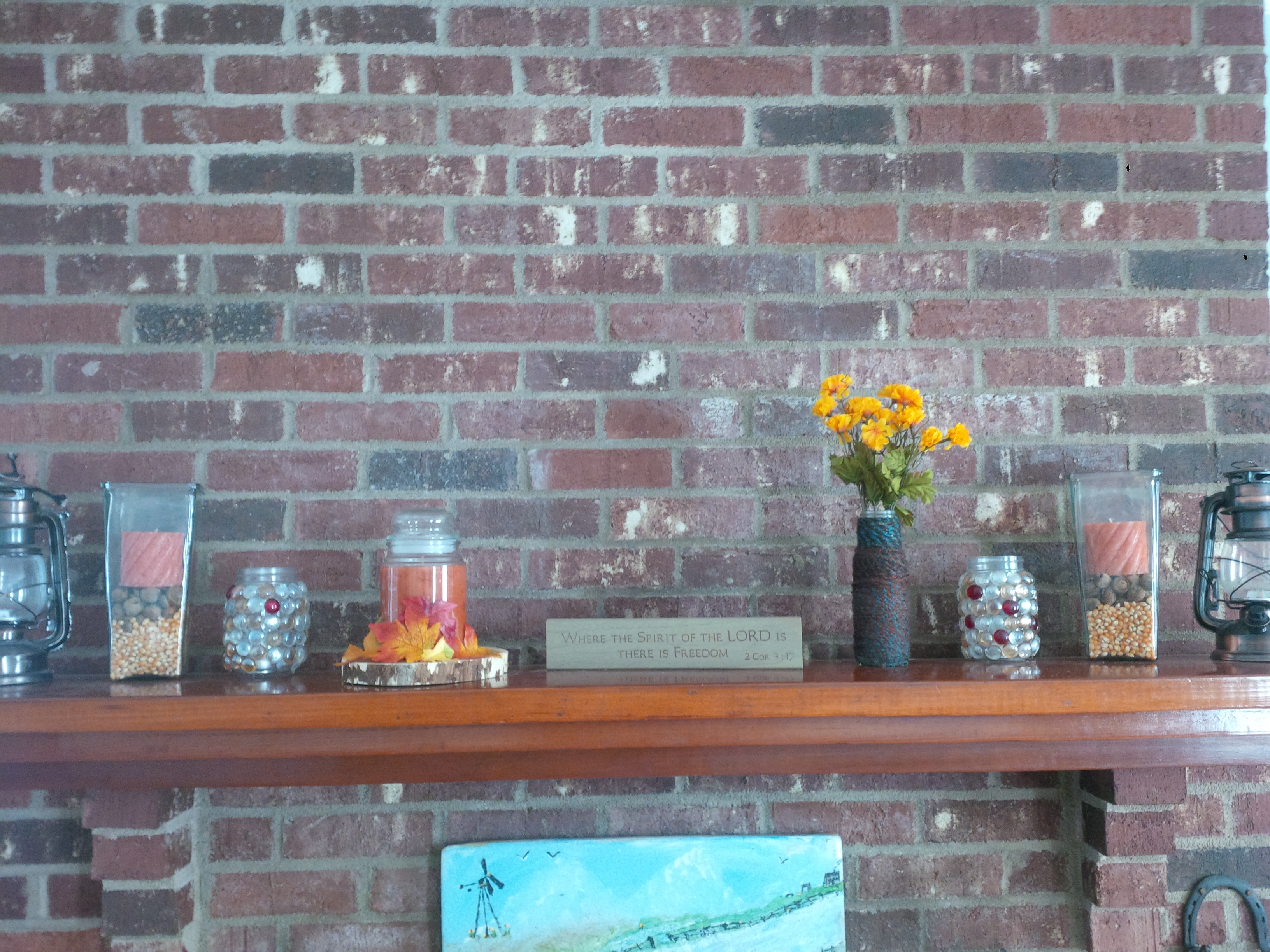
IMG_20151014_143501This was another idea I had saw on Pinterest.  Layer popcorn seeds, acorns from our yard, and a candle.   Simple and easy.

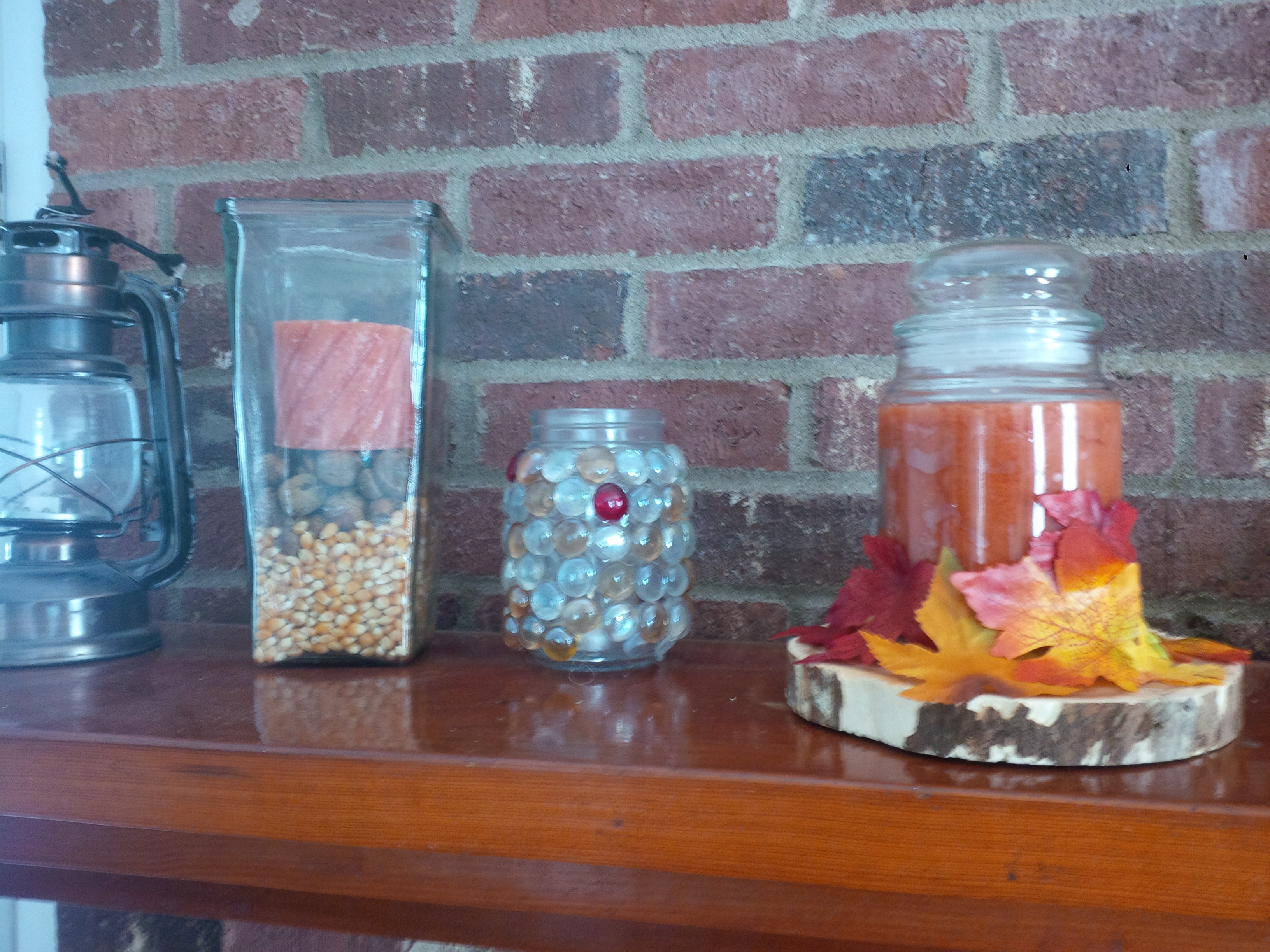
The beaded candle jar on the left we had made at our ladies group.  We just hot glued some beads to the jar and when it is lit, it looks pretty.

 IMG_20151014_143455The hanging lanterns we had used for a camping trip and those gave the mantle a rustic look.  I found a log round in my husband’s woodshop.  I placed a pumpkin fall candle on it and hot glued some Dollar Store leaves around it.

IMG_20151014_161840Some inexpensive, easy decorations for the fall.  Now I need something for the background on the mantle. Hmmmm…..something large and bright enough to break up the colors of the brick.  I had saw picture frames painted bright colors with a wreath hanging down the center.  I might do that.  Keep my eyes out for things.  In time, little by little.  The key is to do something.  These took me only a few minutes each day and now it helped spruce up our home and it didn’t cost us much at all.

Do you have an inexpensive fall DIY ideas to decorate your home with?

Which homeschooling method is right for me? part 2

This is part 2 of “What homeschooling method is right for me?”  Part 1 here

Eclectic Home Schooling Method:

This method is just as the name implies, the parent uses a variety of home school methods depending on the needs of the child. Rather than sticking with a single philosophy or method, the parent chooses many different methods from different resources. This parent might do some textbook based learning, some internet courses, some unit studies, and may enjoy reading “living books”. The possibilities are endless based on what works best for them.
This is for me if I like and believe in:

  • Spending time finding materials that will suit my child’s unique interest and learning styles
  • Following someone else’s scope and sequence—possibly having gaps in learning that comes from jumping around from one curriculum to the next
  • Seeing value in using various curriculum and home school methods because through using different methods, my child gets a fuller picture of the subjects at hand
  • Having a child who likes flexibility in learning and doesn’t mind not using the same materials over again always.

Literature-Based Home Schooling Method:

Through this education, rather than using textbooks—which can be dry and boring to many children, the basis is living books. This is what Charlotte Mason advocated. Students read historical fiction, first person accounts, and books written by people with a passion for their subject. Sonlight Home School Curriculum is a popular curriculum used by many. This method actually covers a broad range of home schooling methods, including the unit study, Charlotte Mason, and other methods.

This is for me if I like and believe in:

  • Wanting to have your child follow a set of scope and sequence
  • Having a general accountability for your child
  • Having your child love to read by reading books that they will love to read
  • Being involved in the day to day process of your child’s education
  • Discussing things that will draw out what your child is learning and perhaps cover controversial subjects raised through the books

Notebook Home Schooling Method

This homeschooling method has children create notebooks of various subjects. Emphasis is on what the children are interested in. They collect information and document their learning.
This is for me if I like and believe in:

  • Giving your children the freedom to follow their own interests
  • Having confidence in the process of learning that you don’t mind if not all of your child’s learning is not documented by a written test
  • Seeing a value in having your child take an interest in things and seeing other things take a back seat until a later time.
  • Having a child who has interests and hobbies that they want to pursue
  • Having a written notebook document of all their learning
  • Allowing your child to learn at his level of creativity which will increase as time progresses


Textbook-Based/Traditional School at Home Method:

This method bases its model on the traditional idea of what a classroom is like. Students use textbooks and workbooks and do typical of a child at a public or private school. Learning is usually laid out in a clear scope and sequence to minimize potential gaps in what the student is learning.
This is for me if I like and believe in:

  •  having your child study material in a similar scope and sequence as other public or private schools
  •  the value of a classroom school and want your child to experience that at home
  •  having your child be able to do well and learn through fill in the blanks and quizzes
  •  having definite ideas about what content you want your child to learn and that it matches well with the textbooks you have chosen


Unschooling/Delight Directed Learning/Relaxed Home School Method

In this method the parent offers support, resources, and encouragement to the child and the child leads the way of learning. The belief is that the child will learn best if they are interested and self-motivated. Because the student sets the pace for learning, they may learn things at a later date than the traditional scope and sequence would suggest. However, when a child is ready to learn and be motivated, they may very well be able to catch up and move quickly beyond others their age. For the most part the learning process will be more enjoyable than if force-fed.
This is for me if I like and believe in:

  • giving your child the freedom to follow their own interests
  • having a child who has interests and hobbies that they want to pursue
  • seeing a value in having your child develop expertise in an interest, and are willing to let other activities take second place, for a season
  •  having enough confidence in the process of learning that you don’t mind if not all your child’s learning can be documented by a written test
  • not having a set of scope, sequence, and structure for your child’s learning

Self-Learning/Independent Study Home Schooling Method

In this method the parent helps the child to learn “how to learn” and then the child uses the tools of reading, writing, and arithmetic to learn more advanced concepts on their own. The parents is not there to teach , but to help the child through the process of developing enough confidence to learn on their own.

This is for me if I like and believe in:

  •  having the ability for your child to learn on their own
  • seeing a value in having your child develop good study skills apart from your involvement as teacher
  •  working with a younger child until they are able to take on more and work independently
  • having your child develop good learning strategies and time management on their own and be accountable to someone outside of the family—like in an umbrella school

Unit Study Method

This method focuses on learning around a central hub, and incorporating different areas of academic study. The student is then able to make connections between the different subjects and learn the material well. It helps the teacher not have to prepare as many distinct lessons. Some unit studies are arranged in a way to be used by children of different ages at the same time. This is helpful if you are schooling more than one child. It helps the student remember information better than in some methods, which minimizes how much reviewing you have to do.
This is for me if I like and believe in:

  •  teaching a variety of ages all the same material just at their own level
  •  having enough time to interact with your children about the materials they are studying and how they relate
  •  doing hands on projects and group learning around a central theme
  •  not following a traditional scope and sequence


Umbrella Organizations for Home Schooling

In this method, the umbrella organizations takes on the oversight of the students learning, giving guidance, evaluating, and holding accountability. They can be very helpful if you want help in choosing curriculum, keeping track of records, or you want outside accountability for your child.

This is good for me if I like and believe in:

  •  having outside accountability for your child
  •  that I am not confident in my ability to teach them all they need to know
  •  that I don’t mind other people choosing curriculum for your child
  •  that I don’t mind giving up a bit of flexibility
  •  not spending your time planning, and gathering resources, because it has already been done—this allows more enjoyable time with your child

So what’s the best choice for me?

With all of the different schooling methods listed, there are many pros and cons. You will have to decide the following to determine which method you will choose:

  •  how you view education
  •  how you want to be involved in teaching
  •  the amount of structure you want
  •  what you want your child to learn
  •  how you want to evaluate your child’s learning progress

Each of these methods has a slightly different answer to these questions. How you answer these questions is really key to finding a home schooling method that will work for you.

Scroll to Top